



Growth Is Not an Outcome. It is a System.
Mark Simoncelli, Founder & CEO, LaunchStone
Most boards have invested meaningfully in growth. What many now recognize is the opportunity to better align those efforts into a more cohesive system that can scale with confidence.
Redefining the Chief Growth Officer
This tension sits squarely in the remit of the Chief Growth Officer. The Chief Revenue Officer is accountable for monetizing existing assets. The Chief Growth Officer is accountable for ensuring the organization has meaningful future monetization opportunities. That distinction is structural, not semantic. The CGO operates across time horizons. They design the future revenue base before the decline becomes visible in the numbers. That requires making explicit trade-offs between core optimization and future relevance. It means reallocating capital, talent, and executive attention away from legacy comfort zones toward uncertain but necessary bets. When the CGO role is treated as an extension of sales or marketing, growth becomes performative. When it is empowered as a portfolio owner with real authority, growth becomes intentional. The difference is not in scope. It is courage.
From Strategy to Architecture
My perspective is shaped by having lived growth from multiple angles. As an operator, I built and scaled global revenue organizations with direct accountability for outcomes. As an advisor, I worked with boards and executive teams navigating transformation under real constraints. That combination matters. Growth fails when ideas do not align with reality. Strategy without delivery becomes theater. Execution without strategy becomes noise. LaunchStone was founded on a simple premise. Growth is not a collection of initiatives. It is an engineered system.
The Intelligence Gap in Growth Strategy
Most enterprises are rich in data and poor in foresight. Dashboards describe what happened. They rarely explain what is likely to happen next or where the next growth engine should come from. Sustainable growth requires moving from descriptive reporting to predictive intelligence. That means integrating three signals. Market intelligence that reveals where value pools are forming. Customer intelligence that exposes unmet needs rather than stated demand. Internal performance intelligence that clarifies where the organization can realistically compete and scale. When those signals converge, growth decisions shift from opinion-driven to evidence-led.
Why Growth Breaks Down in Execution
The biggest obstacle to sustained growth is not capital, technology, or talent. It is governance. Most enterprises are structurally designed to protect the present, not build the future. Decision rights are fragmented. Incentives reward local optimization rather than enterprise outcomes. Accountability breaks at the handoff between idea, build, and scale. As a result, the prediction fails because intelligence is trapped in functions. Execution fails because no one owns growth end-to-end. Sustaining growth fails because once a venture shows promise, it is absorbed back into the core without changing the operating model that constrained growth in the first place. Many organizations do not have a growth strategy problem. They have a coordination problem disguised as innovation.
Venturneering and the LaunchStone 4C Framework
To address this, LaunchStone developed a proprietary growth model called Ventureering. It blends the creativity of venture building with the discipline of corporate development into a single operating system. At the center is the LaunchStone 4C framework. Create focuses on building new ventures intentionally from the ground up, designed to scale rather than experiment. Capture accelerates growth by acquiring, licensing, or investing in existing assets that close critical gaps and reduce time-to-market.
Collaborate orchestrates ecosystems, aligning corporations, founders, investors, and partners around shared outcomes with clear decision rights. Capitalize ensures ventures are funded, governed, and commercialized for long-term relevance rather than short-term validation. Together, the 4Cs replace fragmented innovation with a managed growth engine.
From Theory to Execution in Flight
Pointing to my current work with a large, global industrial and technology enterprise as a clear example of Venturneering in practice. The organization is profitable but structurally constrained. Over several years, it launched multiple innovations and digital initiatives without producing a scalable new growth engine. Strategy engagements clarified options, and innovation teams generated pilots, but ownership across the full journey from ambition to commercialization remained fragmented. Using the 4C model, LaunchStone is currently working with the organization to design and launch a new venture as part of a broader portfolio-based growth engine aligned with clearly defined growth themes adjacent to the core business. Approximately four months into the engagement, the emphasis has been on establishing the foundational elements required for disciplined execution across both the venture and the wider growth system, rather than accelerating prematurely toward market visibility. To date, the work has focused on validating customer need prior to product development, identifying and selectively accessing external capabilities to support differentiation, and aligning internal teams and external partners around a shared operating model. Governance structures, decision rights, and performance indicators have been defined early to support coordinated execution at both the venture level and across the broader growth engine. In parallel, funding considerations, commercialization pathways, and longer-term scaling options have been assessed and structured upfront to reduce execution risk and avoid downstream structural constraints. The venture and the broader growth engine remain in development and are progressing toward initial revenue, supported by an active and closely managed customer pipeline. Outcomes will depend on a range of internal and external factors. Early progress indicates the organization is establishing a more deliberate, integrated, and repeatable approach to designing, launching, and scaling new growth initiatives.
The Real Measure of Growth
Growth is no longer about isolated bets or heroic leaders. It is about building the machinery that repeatedly turns opportunity into performance. Organizations that win will stop treating growth as an aspiration and start treating it as a system. Those that do not will continue to innovate energetically and grow accidentally. The difference is not ambition. It is alignment, orchestration, and the discipline to design growth deliberately from the start
About the Author
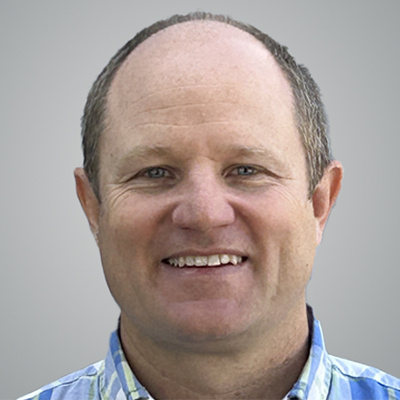
Mark Simoncelli is a seasoned growth architect who partners with senior executives and boards to build repeatable and scalable growth engines in complex and fast-changing environments. Across a global career spanning enterprise, venture-backed growth, and professional services, Mark has helped organizations translate bold growth ambition into execution by aligning strategy, innovation, and go-to-market discipline to drive sustained performance. He has previously held senior revenue, growth and organizational development positions at Mach49, Frost & Sullivan, Woolworths, and Accenture. Mark is known for operating at the intersection of growth strategy and delivery, ensuring ideas move beyond experimentation into material impact. He brings deep expertise in venture building and venture investing, with a distinct strength in ecosystem orchestration. Mark designs and leads multi-party growth ecosystems that unite corporations, founders, investors, and technology partners around shared value creation. His work focuses on shaping investment theses, launching and scaling new ventures, and structuring partnerships that accelerate time-to-market while expanding growth beyond the core. As a founder, operator, and former Chief Revenue Officer, Mark has built and scaled global revenue organizations, advised executive teams through transformation, and helped leaders mobilize internal and external capabilities into cohesive growth systems. He is frequently trusted as a C-suite and board advisor for his ability to bring clarity, rigor, and momentum to high-stakes growth agendas. Mark contributes executive perspectives to the Growth Guidance community, sharing practical insight for Chief Growth Officers navigating where to play, how to win, and how to build organizations that grow deliberately, not by chance.